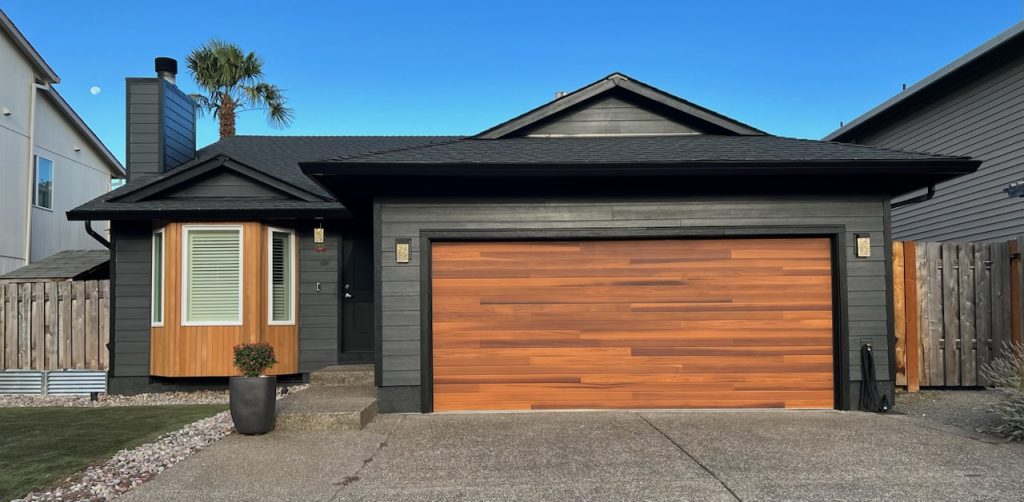
If you live in Portland, your siding is basically in a long-term relationship with moisture. Months of rain, damp shade on north-facing walls, moss growth, and that on-and-off freeze cycle mean the differences between siding materials show up fast.
Two quick takeaways up front:
- Cedar can be beautiful, but it typically needs more ongoing maintenance to perform well through Portland winters.
- Fiber cement (like James Hardie) is known for durability and moisture resistance when it’s installed correctly and maintained with basic upkeep.
Below is a practical comparison to help you choose the right option for your home, budget, and tolerance for maintenance.
Why Portland’s Climate Matters So Much for Siding
Portland’s weather doesn’t usually destroy siding in one dramatic event. It wears it down slowly through:
- Persistent moisture that limits drying time
- Shaded elevations that stay damp longer
- Algae/mildew/moss growth that holds moisture against the surface
- Wind-driven rain that finds gaps around trim, windows, and penetrations
- Freeze-thaw cycles that can expand tiny cracks and joints
In other words, siding here isn’t just about curb appeal. It’s about how well the material handles moisture over time, and how much upkeep it takes to keep it performing.
The Big Picture: How Hardie and Cedar Compare
Cedar siding at a glance
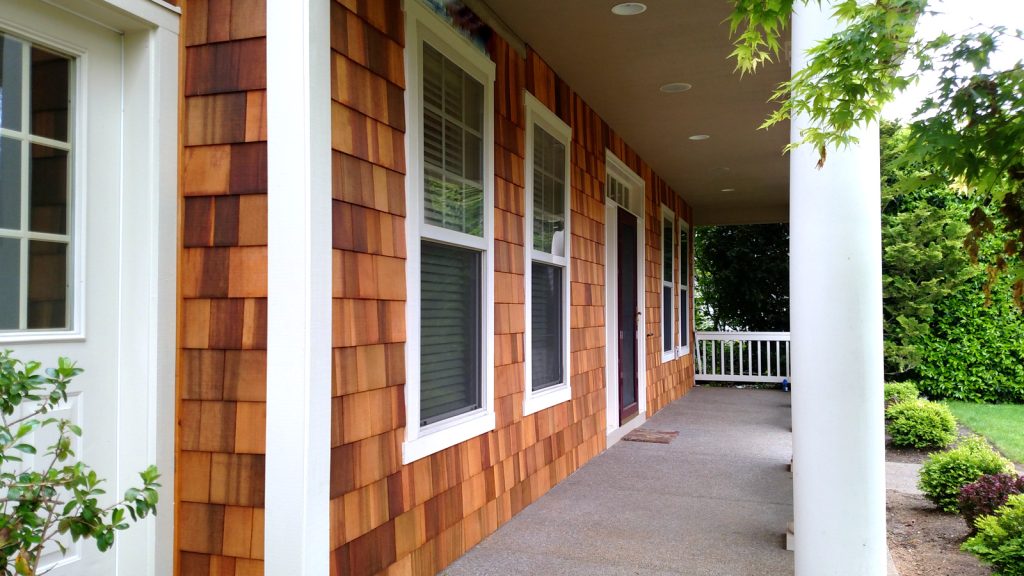
Cedar is a natural wood product with a classic Northwest look. It’s lightweight, easy to cut, and can be repaired board-by-board. But it is still wood, which means it can be more sensitive to prolonged moisture exposure if paint, stain, flashing, caulking, or clearances aren’t maintained.
Hardie fiber cement at a glance

Fiber cement siding is a manufactured product made to resist common threats like moisture damage, rot, and insect activity. In Portland, it’s often chosen by homeowners who want a more “set it and forget it” exterior, provided it’s installed to manufacturer specs and kept clear of constant splashback or soil contact.
Durability: Rot Resistance, Pests, and Longevity
Cedar durability
Cedar has natural resistance to decay compared to many other woods, but it is not rot-proof. When cedar stays wet too often, common long-term risks include:
- Rot and soft spots, especially near ground lines, roof-to-wall intersections, and poorly flashed windows
- Woodpecker damage in some areas
- Insect activity, especially if moisture is present and paint/stain has failed
- Cupping, splitting, and checking as boards expand and contract
Cedar can last a long time in Portland, but it’s much more dependent on ongoing maintenance and moisture management.
Hardie durability
Fiber cement is not a food source for termites and is not vulnerable to rot the way wood products are. Homeowners often choose it for:
- High moisture resistance
- Dimensional stability
- Long-term durability when installed with correct clearances, flashing, and fastening
A key phrase is “when installed correctly.” In wet climates, installation details like flashing, kickout flashing, trim transitions, caulking strategy, and ground clearances matter as much as the material itself.
Cited sources supporting durability claims:
- James Hardie Installation and Technical Documentation (fiber cement performance and installation requirements)
Maintenance: What You’re Signing Up For
Cedar maintenance in Portland
Cedar typically requires more frequent attention because paint and stain are the “armor” that protects it.
A realistic maintenance approach often includes:
- Annual inspection (spring is ideal)
- Cleaning as needed to remove mildew and moss
- Re-caulking small joints as they open over time
- Repainting or re-staining on a cycle that depends on exposure:
- South/west walls often fail faster due to UV and weather
- North-facing or shaded walls can stay damp and grow mildew faster
If you love cedar, the best strategy is not “install and hope.” It’s choosing cedar while committing to a consistent maintenance rhythm.
Cited sources supporting cedar maintenance needs:
- Western Red Cedar Lumber Association guidance on finishing and maintenance
Hardie maintenance in Portland
Fiber cement is lower maintenance, but it is not maintenance-free.
A realistic plan includes:
- Annual inspection around windows, penetrations, and trim joints
- Basic cleaning (especially on shaded elevations)
- Touch-up paint for chips or exposed edges
- Caulk monitoring, depending on the system used
If you want “less maintenance,” fiber cement is usually the better match for Portland, especially for homeowners who do not want to repaint frequently.
Cited sources supporting fiber cement maintenance expectations:
- James Hardie care and maintenance guidance
Cost: What to Expect (and What Drives the Price)
Cost is where homeowners often get stuck, because the material price is only part of the equation. In Portland, total siding cost is driven heavily by:
- Removal and disposal of old siding
- Repairs to sheathing, framing, or rot
- Window and trim complexity
- Height, access, and labor difficulty
- Detailing requirements (flashing, trim packages, soffits)
- Whether you’re doing paint, stain, or prefinished products
Cedar cost considerations
Cedar can sometimes look “similar” in base price to fiber cement on paper, but costs can climb due to:
- Higher finishing labor (paint or stain systems)
- More frequent refinishing over time
- Potential for higher repair frequency in high-moisture areas
Hardie cost considerations
Fiber cement can carry:
- Higher labor cost in some cases (heavier product, specific install requirements)
- Trim and flashing detail needs
- Painting costs if not using a prefinished product
The bigger financial difference is often not the install price. It’s the “cost of ownership” over 10–20 years, especially in Portland’s damp climate.
Appearance and Style: The “Portland Look” Factor
Cedar is still the gold standard for a warm, natural look. Many homeowners love it because it feels authentic and fits Portland architecture beautifully, especially Craftsman and older neighborhood homes.
Hardie can also look excellent, especially with:
- The right siding profile (lap, shingle, panel)
- Proper trim details
- High-quality paint and color selection
- Design-driven upgrades like thicker trim, window casings, and accent areas
If cedar is your aesthetic preference, the decision comes down to whether you want to take on the maintenance. If you want that same style with less maintenance stress, fiber cement is often a strong alternative.
Installation Matters More Than Most People Think
In Portland, many siding failures aren’t “bad siding.” They’re moisture entry problems.
Regardless of siding choice, make sure your contractor can clearly explain:
- Flashing strategy (especially at roof-to-wall intersections)
- Kickout flashing
- Window flashing details
- Clearances from grade, decks, and roofing
- Venting and drainage approaches
- How they handle penetrations (lights, vents, hose bibs)
Which One Should You Choose?
Here’s a practical way to decide:
Choose cedar if:
- You want a natural wood look and it fits your home’s architecture
- You’re willing to keep up with finishing and inspections
- You’re comfortable budgeting for periodic refinishing over time
Choose Hardie fiber cement if:
- You want strong durability in wet conditions
- You prefer lower maintenance expectations
- You want long-term performance with fewer “surprise repairs”
- You plan to stay in the home and want predictable exterior upkeep
Choose both:
If you love the look of both, you could choose Hardie siding with cedar accents. Below are some examples.
In Portland, fiber cement often wins for homeowners who value long-term durability and lower maintenance. Cedar still makes sense when the look is a priority and the homeowner is prepared to maintain it consistently.

Hardie and cedar are both valid siding choices. The right one depends on your goals.
If you want timeless beauty and natural character, cedar can be a great choice, especially when it’s properly installed and maintained. If you want long-term durability with fewer maintenance demands, fiber cement is often the better fit for Portland weather.
We’re happy to answer any questions. Schedule a free consultation today.